

Deadlift Form: Building a Solid Foundation
Structured deadlift form is essential for consistent progress. The deadlift is one of the most effective compound movements you can do. It works the entire posterior chain, improves grip, and has a direct carryover to everyday life. Because it involves heavy loads, it’s a movement that requires attention to detail.
In this guide, we’ll break down deadlift mechanics to help you lift effectively and safely.
The Setup: Establishing Your Base
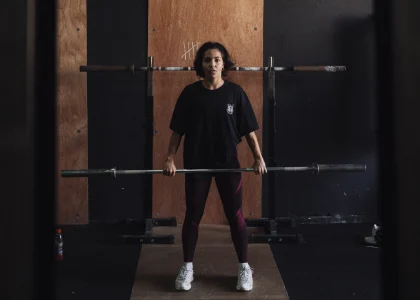
Foot Position: Start with your feet about shoulder-width apart. The bar should be over your midfoot. This position provides the best leverage for the pull. Grip the bar just outside your legs. Your arms should hang straight down to keep the path of the bar efficient.
Shoulder Position: Before you start the lift, pull your shoulders back and down slightly. This creates tension through your upper back and helps keep the bar close to your body.
Spinal Alignment: Keep your head in a neutral position relative to your spine. Looking slightly ahead and down helps maintain this alignment. Avoid looking up too sharply, as it can cause unnecessary strain on the neck and back.
The Movement: Key Phases
Phase 1: The Initial Pull (Floor to Knee)
Think of the first part of the lift as a leg press. Push the floor away with your feet. Your hips and shoulders should rise at the same rate. This ensures your legs are doing the work and keeps your back in a safe position.
Phase 2: Transition (Knee to Hip)
As the bar passes your knees, bring your hips forward to meet the bar. Keep the bar close to your shins and thighs throughout the entire movement. The closer the bar is to your center of gravity, the more efficient the lift becomes.
Phase 3: The Lockout
Finish by standing tall with your hips and knees fully extended. Squeeze your glutes at the top to complete the rep. There’s no need to lean back excessively; just focus on a vertical, stable finish.
Common Form Cues
Keep a flat back: If you feel your back rounding, it often means your hips started too high. Lower your hips slightly and engage your legs more at the start.
Keep the bar close: The bar should practically scrape your legs. If it drifts away, it puts more load on your lower back. Focus on pulling the bar in toward you.
Control the start: Don’t try to rip the bar off the floor. Start with a deliberate, controlled pull to build tension before the bar leaves the ground.
Programming for Strength
Start with a weight that allows you to maintain good form for 3–5 reps. Gradually increase the weight as you become more comfortable with the mechanics. Focus on quality over the total amount of weight you’re lifting.
A simple starting block could be 3 sets of 5 reps, once a week. This gives you plenty of practice without overtaxing your recovery. Once you have the technique down, the strength will follow naturally.
Final Thoughts
Deadlifting is a skill that takes time to master. Prioritize your technique first and the weight will come. Taking the time to get the fundamentals right now will pay off for years to come.
Ready to get started? Check out our class schedule or find more information on Deadlift Form Resources.
SECRET CODE: REBELRISE2026